


An unsecured car loan is a straightforward way to get your hands on a car without the bank holding the title as security. You get the cash, you buy the car, and you own it from the very first day. Lately, more people are leaning toward this because they want to avoid complex paperwork and get approved fast.
In simple terms, we help you secure a loan where your car is not used as collateral. Since there’s no asset for a lender to claim if you can’t make payments, they focus entirely on your income and credit history.
This usually means we can help you get moving much quicker, though you will typically need a solid credit score to snag the most competitive rates. According to the ABS, personal finance commitments, the category these loans fall into, reached a massive $2.74 billion in a single month back in 2024. This proves that many of us are willing to trade a slightly higher interest rate for the freedom of outright ownership.
You get a lump sum, buy your car, and then pay it back in regular chunks. But the ‘price’ of that money, the interest rate, depends entirely on you.
Because the lender is taking a higher risk without a car to back the loan, they look at:
You are not stuck with one choice. You can usually pick a term between 1 and 7 years.
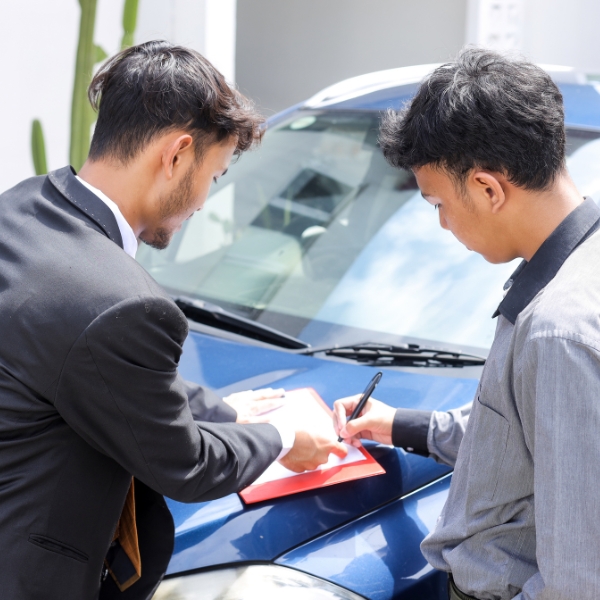
The main difference comes down to whether the loan is tied to your car or not. That one choice affects how much you pay, how easily you get approved, and how much freedom you have when shopping around.
The tables below mention the features, pros, and cons of each loan type so you can pick the best option for your needs.
The better option depends on what you value more: The freedom of full ownership from day one, or getting the lowest possible interest rate to keep costs down?
| Feature | Unsecured Car Loan | Secured Car Loan |
|---|---|---|
| Collateral | No collateral needed. The car is not tied to the loan, so you own it outright immediately. | The car acts as security for the lender until the final payment is made. |
| Interest Rates | Usually higher because the bank is taking on more risk without an asset. | Generally lower since the vehicle provides a ‘safety net’ for the lender. |
| Approval | Primarily based on your credit score, job stability, and bank statements. | Based on your personal finances, plus the age and value of the car. |
| Vehicle Choice | Total flexibility – Buy an old classic, a private sale, or a 10-year-old UTE. | More restricted, lenders usually have strict rules on car age and condition. |
| Risk | No risk of the car being repossessed, though your credit score will take a hit if you miss a payment. | The lender can legally seize and sell the vehicle if you fail to meet repayments. |
| Car loan option | Pros | Cons |
|---|---|---|
| Unsecured Car Loan | ✅ No collateral required, so your car is not tied to the loan, and you own it outright from day one ✅ Faster approval process in most cases ✅ More flexibility to choose vehicles, including private sales and older cars | ❌ Higher interest rates compared to secured loans ❌ Stricter eligibility based on credit score and income stability ❌ Often, lower borrowing limits |
| Secured Car Loan | ✅ Lower interest rates, making repayments more affordable ✅ Easier approval for many borrowers if the vehicle qualifies ✅ Potentially higher loan amounts available | ❌ The vehicle is used as collateral until the loan is fully repaid ❌ Risk of repossession if repayments are missed ❌ Restrictions on eligible cars (age, condition, value) |
Here is what we look for to get your application moving:

Use our calculator to see what you can actually afford every month.

Don’t take the first offer. Check 40+ lenders to see who wants your business.

Our digital forms usually take about 10 minutes. No printers or scanners are required.

You will need your ID, recent payslips, and your bank statements.

Read the fine print, sign it digitally, and the cash usually hits your account in a day or two.
Some lenders may offer balloon payment structures with unsecured car loans, depending on the lender and loan terms. Availability can vary based on your circumstances and the vehicle you’re buying.
For security purposes, please solve this simple puzzle to verify you are human before sending an OTP.